Wednesday, March 24, 2010

Misguided Immigration Attorneys And Reverse Brain Drain

I am strongly pro-immigrant. I want immigrants, especially from poorer countries, to have the same opportunities as those of us from richer nations.

But I'm torn on the issue of professional visas.

My discomfort arises from the dog-eat-dog attitude displayed by some immigration lawyers.

They decry the loss of skilled immigrants because these workers will return to their home countries and perhaps work for U.S. competitors. They've even invented a term for this situation. They call it reverse brain drain.

Their position, at best, is disingenuous. When professionals from poor countries go home, their wages will not increase.

What Is Brain Drain?

Brain Drain refers to a large scale exodus of talented persons moving from one region to a different region to pursue higher paying careers and better living conditions. The exodus occurs from poorer areas to richer areas.

Brain Drain Writ Small: A Personal Example

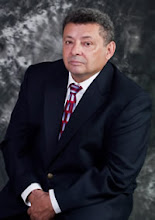
I was raised in Barrio Logan, a poor Hispanic area in San Diego, California. I left as a teenager. Upward mobility needed no justification. Moving out was a no-brainer. A nicer neighborhood. A bigger house. A better car.

My body may have left my old neighborhood. But not my soul.

A large part of my motivation to succeed was a desire to improve the conditions for those left behind. The memories of learning to ride a bike, playing marbles, and chomping on watermelon with buddies on a hot summer day are special memories. To this day, my old neighborhood has a special place in my heart.

When I moved out, I left with optimism - optimism that somehow, someday, I would return as a San Diego immigration attorney with skills to make things better for my family and the families of my friends.

It's not quite that easy with immigrants from poor neighborhoods in another country.

Brain Drain Writ Large: The Agony Of Skilled Immigrants

I've been fortunate. I live close to areas resembling my old neighborhood. I can still fulfill my dream to help those stuck in poor areas like where I once lived.

Not so with foreign scholars and professionals. They cannot live in both worlds at once. They cannot continue to live in the U.S. after college graduation and at the same time help their local communities. The distance is not just a few miles.

Their choices are harder than mine.

Of course, some immigrants do not want to return home. As an international relations student and immigration lawyer, I learned many would cherish the opportunity to go home and make it a better place for others.

Competition Is Not The Answer

I don't agree with immigration attorneys who base their support for professional visas on fears of making U.S. competitors stronger.

This position shows me a lack of concern for helping less fortunate countries. This position glorifies our economic superiority as the only thing that matters.

Certainly, we need more skilled workers to meet our demands in various professions. Poor countries have the same needs.

The answer to the shortage is not to try to keep the best and brightest just for ourselves. Instead, we need to develop international education and training programs which strengthen the emerging global economy. We need to share workers. We need to share skills. We need to share technology and resources. By sharing, perhaps we could end the global economic mess sooner.

If we are ever to have global peace and harmony, cooperation, not competition, is the key.

In my view, immigration attorneys should help others, across oceans and continents, because we are all brothers and sisters. Nothing more. Nothing less.

Friday, January 1, 2010

Peace, Politics, And The Noble Candidacy of Morgan Tsvangirai

Like many, I was surprised to learn President Obama had won the 2010 Noble Peace Prize.

And I was more surprised to learn his victory was not universally celebrated by African leaders.  

Accustomed to being accorded second class status, several Africans felt Obama's victory minimized the leadership and courage of one of their own: Zimbabwe Prime Minister Morgan Tsvangirai.

This position was echoed by others knowledgeable about African politics.

The Daily Kos wrote:

"The Nobel Peace Prize is about who you are, not who you aren't."

"9 months ago, Barack Obama was the junior senator from Illinois, and I hope that over the next 39 (hopefully 87) months he does something to earn the award, but there is simply no comparison between his actions to date (less than 9 months) to the years long efforts of Morgan Tsvangirai . . .  on behalf of peace, reconciliation, and justice."


Tsvangirai's record is clear.

For over a decade, he has challenged Zimbabwe President Robert Mugabe - one of the world's most ruthless dictators.  Tsvangirai has been repeatedly arrested, jailed, and tortured.  He has survived three assassination attempts.  Condemning human rights violations, Tsvangirai has consistently urged peaceful solutions to his country's problems.

In 2002 and 2008 he ran against Mugabe for the presidency.  Both elections were marred by massive fraud.  Despite winning the 2008 election, Tsvangirai was denied the presidency by Mugabe.  Soon after the election ended, Mugabe began to punish his opponent's supporters.  Tsvangirai stayed the course.  Eventually, an agreement was reached with Mugabe and the two share power.

Writing in Brown University's Daily Herald, Dominic Mhiripiri, a student who grew up in African, explained the Noble Peace Prize denial of Tsvangirai's candidacy:

"I took Obama's Nobel success with a personal dimension," notes Mhiripiri, "as it denied a similar triumph for a bold and courageous countryman whose sacrifice has been a beacon of hope in the storied struggle for democracy in my country and across the African continent."


"In risking his life for his country, Tsvangirai has slowly established himself as the face of an emerging brand of 21st-century African leaders who value peace and democracy more than personal power, recognition, and wealth."

Although living in a part of the world often neglected by the major powers, Tsvangirai's actions deserve world wide acclaim.

Hopefully, his merits will be fully considered when the Committee makes it next selection. 

By: Carlos Batara, United States, and Olusegun Iselaiye, Nigeria

Wednesday, December 30, 2009

Why Diversity Fusion?


We live in a global community.

Thanks to technology, we can read and learn about people and events in far away places within the blink of a second.

But we do not behave as a global community.

For most, loyalties are narrow.  Nationalism still reigns supreme.  On major worldwide issues -- from global warming to nuclear proliferation -- our views rarely extend beyond the prevailing opinions expressed inside our country's physical borders.

We remain dependent, consciously or subconsciously, on national leaders and media personalities for guidance on these issues.    Our opinions are limited.  Limited by a narrow national scope.

We have the ability to perceive more, understand deeper, and comprehend greater.

Why not reach out to our brothers and sisters living in other parts of the world?

On issues of the world, why not listen to each other without the filters of national political and media agendas?

Why not use technology as the gift that it is?

Which brings us to this blog, DiversityFusion.

Diversity, as a political definition, refers to people of different backgrounds.

As a political policy, diversity reflects a tolerance for individuals of different background.

This is not enough.

Fusion embraces the merging of different elements into a new union, a new whole.

DiversityFusion is the merging of people's opinions from different ethnic, cultural, religious, and regional backgrounds into new and unique perspectives on world affairs. 

This blog hopes to help address that need.

We may not always agree, but we can share.

In sharing, may a new fusion emerge.